
- Позвоните нам : +86-15060765919
- НАПИШИТЕ нам : bella@fespower.cn
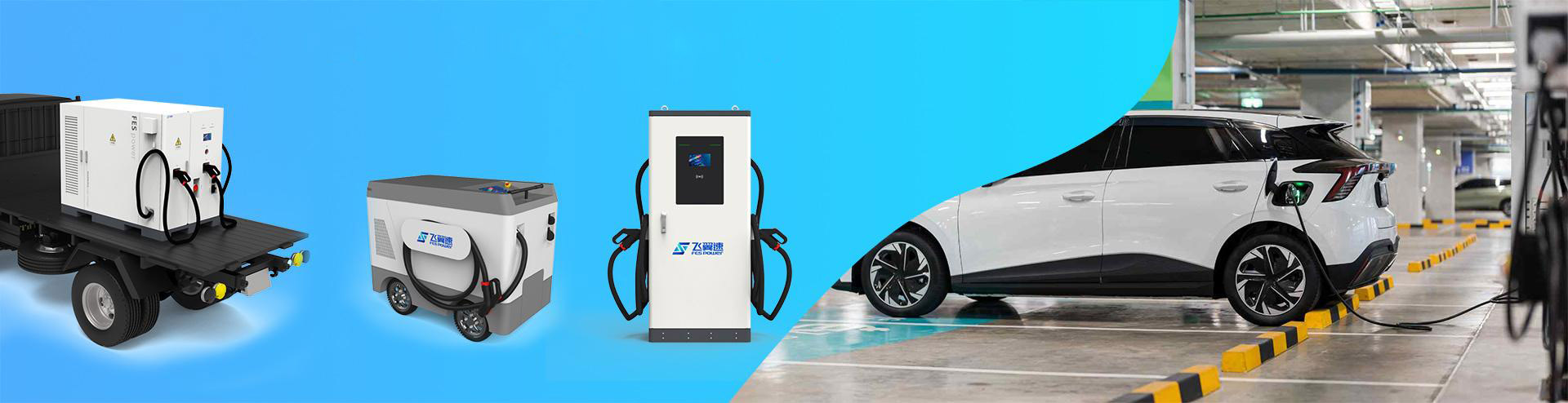
По мере того как электромобили (EV) получают все большее распространение по всему миру, инфраструктура зарядки электромобилей становится важнейшей частью этого перехода. Один из самых распространенных — и вызывающих путаницу — вопросов как у новичков, так и у предпринимателей звучит так:
Что мне выбрать: зарядное устройство переменного тока или зарядное устройство постоянного тока? 🤔
Хотя оба устройства служат одной и той же цели — зарядке электромобилей — Разница между зарядными устройствами переменного и постоянного тока выходит далеко за рамки скорости зарядки.Это влияет на стоимость установки, пользовательский опыт, бизнес-модели и долгосрочную окупаемость инвестиций.
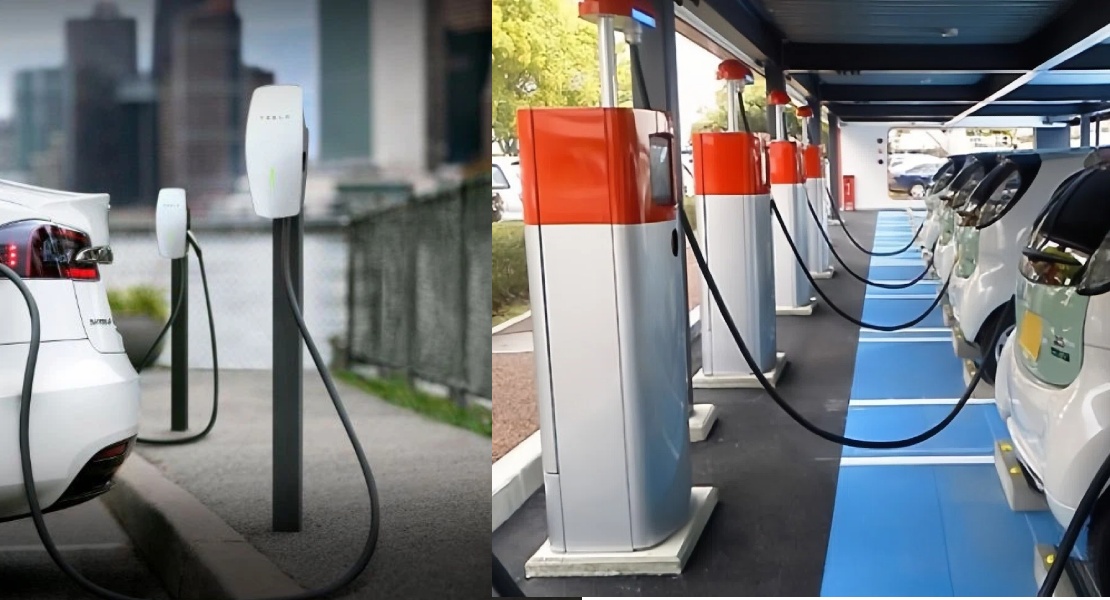
Давайте разберем это шаг за шагом. 👇Что такое зарядное устройство переменного тока для электромобилей?
🔌Ан Зарядное устройство для электромобилей переменного тока (AC) подает переменный ток непосредственно в автомобиль. Внутри электромобиля бортовое зарядное устройство Преобразует переменный ток в постоянный для зарядки аккумулятора.
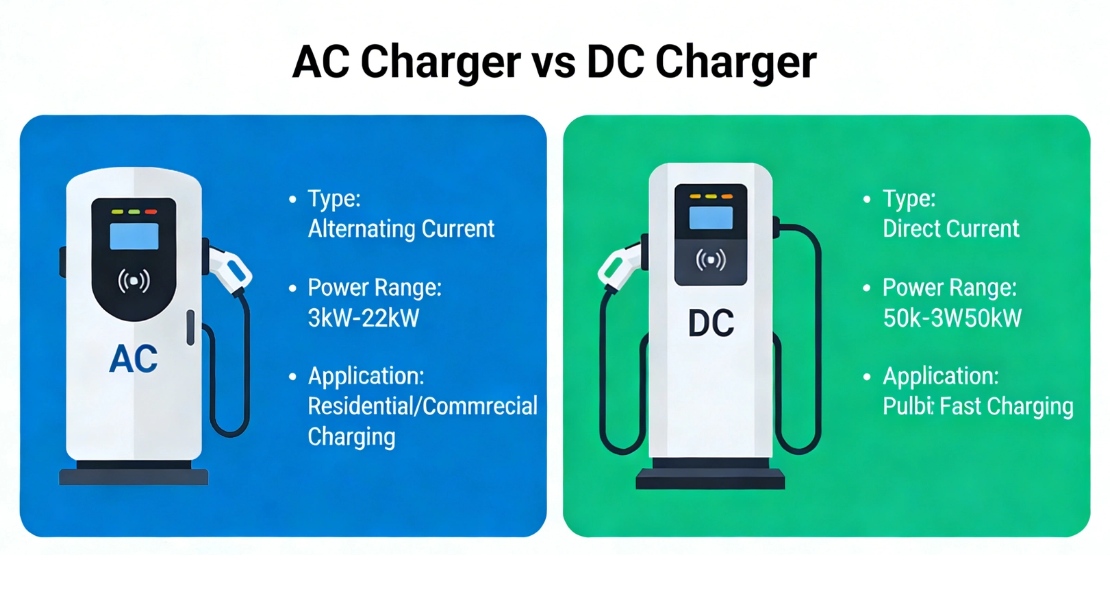
Основные характеристики сетевых зарядных устройств:
⚡ Диапазон мощности: Обычно 3,7 кВт – 22 кВт
🚗 Скорость зарядки: Время работы от медленного до среднего (несколько часов для полной зарядки).
🏠 Типичные сценарии использования: Дома, офисы, гостиницы, парковка для жильцов.
💰 Более низкая стоимость: Более доступное оборудование и монтаж.
Зарядные устройства переменного тока идеально подходят для мест, где автомобили припаркованы на длительное время — например, на ночь или в рабочее время.
✅ Плюсы:
Меньшие первоначальные инвестиции
Более простая установка
Подходит для ежедневной зарядки с низкой интенсивностью.
❌ Минусы:
Длительное время зарядки
Ограниченная пригодность для коммерческих площадок с высокой оборачиваемостью товаров.
Что такое зарядное устройство постоянного тока для электромобилей? ⚡⚡
A Зарядное устройство для электромобилей постоянного тока (DC). преобразует переменный ток в постоянный. внутри самого зарядного устройстваподавая постоянный ток непосредственно в аккумулятор автомобиля, минуя бортовое зарядное устройство.
Основные характеристики зарядных устройств постоянного тока:
⚡Диапазон мощности: 30 кВт – 400 кВт+
🚀Скорость зарядки: От быстрого до сверхбыстрого
🏢Типичные сценарии использования: Автомагистрали, автопарки, общественные зарядные станции
🔋Высокая эффективность: Идеально подходит для быстрого пополнения баланса.
Быстрозарядные устройства постоянного тока являются основой современных устройств. коммерческие и общественные сети зарядных станций.
✅ Плюсы:
Чрезвычайно быстрая зарядка
Более высокая текучесть кадров среди пользователей
Высокий потенциал получения дохода для операторов
❌ Минусы:
Более высокие затраты на оборудование и монтаж.
Требуется более надежное подключение к электросети.
Зарядные устройства переменного и постоянного тока для электромобилей: сравнительный анализ.
| Особенность | Зарядное устройство переменного тока | Зарядное устройство постоянного тока |
|---|---|---|
| Скорость зарядки | Медленно-средне 🐢 | Быстро – Сверхбыстро 🚀 |
| Преобразование энергии | Внутри транспортного средства | Внутри зарядного устройства |
| Типичная мощность | До 22 кВт | 30 кВт–400 кВт+ |
| Стоимость установки | Низкий | Выше |
| Лучше всего подходит для | Дом и рабочее место | Коммерческий и общественный |
| Потенциальная окупаемость инвестиций | Умеренный | Высокий |
Правильный выбор зависит от приложение, бюджет и потребность в зарядке:
🏠 Зарядка дома или на рабочем месте: Зарядных устройств переменного тока достаточно.
🅿️ Торговые центры, операторы парковок: Смесь переменного и постоянного тока
🚛 Автопарки, логистика, такси: Быстрые зарядные устройства постоянного тока
🛣️ Придорожные и общественные станции: Мощная зарядка постоянным током крайне необходима.
Во многих реальных проектах, гибридная стратегия развертывания Обеспечивает оптимальный баланс между стоимостью и производительностью.
Как FES Power Поддерживает зарядку как от сети переменного тока, так и от постоянного тока 🔋⚙️
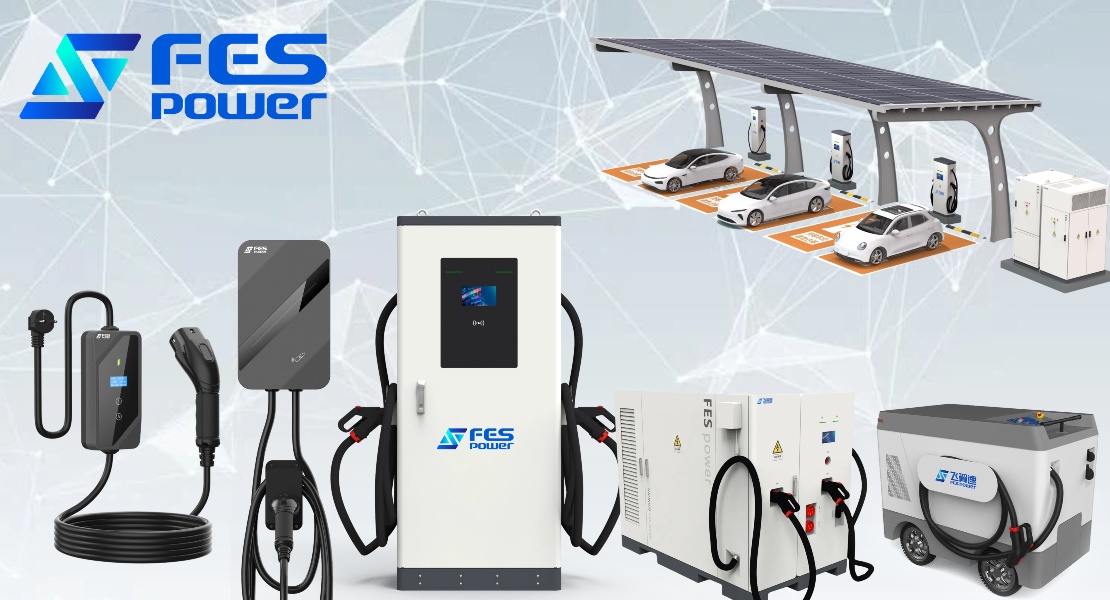
В FES PowerМы предлагаем полный спектр услуг. решения для зарядки электромобилей коммерческого класса разработано для мировых рынков.
🚀 Наши решения для быстрой зарядки постоянным током
Мощные зарядные устройства постоянного тока (120 кВт, 160 кВт и масштабируемые конфигурации)
Архитектура разделенного типа с силовыми шкафами и зарядным терминалом
Предназначено для общедоступные зарядные станции, автопарки и места с высокой интенсивностью использования
Интеллектуальная защита, стабильная работа и гибкие возможности расширения.
🔌Наши решения для зарядки от сети переменного тока
Надежные зарядные устройства переменного тока для коммерческое и полуобщественное использование
Идеально подходит для гостиницы, офисы, жилая парковка
Соответствует международным стандартам и сертификатам.
🌍 Вся продукция FES Power создана с использованием с учетом экспортных рынков, поддерживая основные стандарты зарядки и требования соответствия.В заключение: это не переменный или постоянный ток — это подходящий инструмент для работы ✅
В вопросах зарядки электромобилей не существует универсального решения.
зарядные устройства переменного тока предлагают доступность и простоту, при этом зарядные устройства постоянного тока обеспечить скорость, эффективность и более высокую коммерческую отдачу.
Понимание Реальная разница между зарядными устройствами переменного и постоянного тока для электромобилей. позволяет вам:
Разработайте более эффективную зарядную инфраструктуру.
Оптимизация инвестиционных и операционных затрат
Обеспечить водителям электромобилей более удобный процесс зарядки.
Если вы планируете проект по созданию зарядных станций или изучаете коммерческие возможности, Выбор правильной технологии зарядки — первый шаг к долгосрочному успеху..



 Поддерживается сеть IPv6